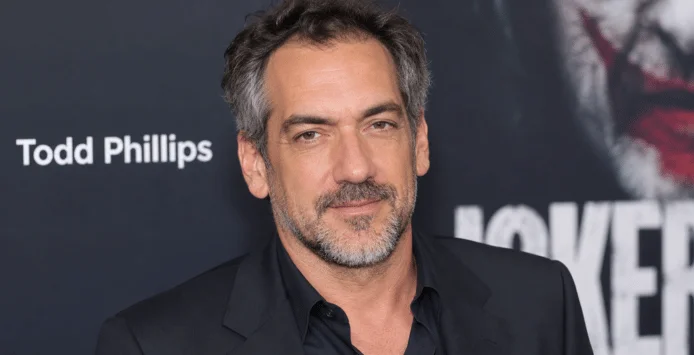
Todd Phillips has built one of Hollywood’s more unusual directing careers. He moved from provocative documentaries to hit comedies and dark comic-book dramas. His best-known work includes The Hangover trilogy and the two Joker films.
His career matters because he has repeatedly changed direction after major success. He became closely associated with American studio comedy before taking a darker path. That shift brought major box-office success, Oscar recognition, and sharp debate among moviegoers.
Quick answer: Phillips is an American filmmaker known for Old School, The Hangover, War Dogs, and Joker. His career began with documentaries before expanding into mainstream comedy. His 2019 Joker earned more than $1.07 billion worldwide and brought him an Academy Award nomination for directing.
Quick facts
| Fact | Details |
|---|---|
| Profession | Director, producer, screenwriter |
| Born | 1970 |
| Birthplace | New York City |
| Early work | Documentary filmmaking |
| Breakthrough comedy | Road Trip |
| Major comedy success | The Hangover |
| Major drama | Joker |
| Recent directing credit | Joker: Folie à Deux |
| Oscar recognition | Directing, Best Picture, and adapted screenplay nominations connected with Joker |
| Active since | Early 1990s |
Public sources agree that he was born in New York City in December 1970. IMDb lists December 20, while another widely used reference lists December 19. He is therefore 55 years old as of October 2026.
From documentaries to mainstream comedy
Phillips did not begin his career with glossy studio movies. While studying film at New York University, he became interested in documentary filmmaking. That work placed him around subjects defined by extreme behavior and American subcultures.
His early documentary Hated: GG Allin and the Murder Junkies followed controversial punk performer GG Allin. He later co-directed Frat House, which focused on fraternity culture and hazing. Those projects established an interest in people behaving beyond normal social boundaries.
That interest remained visible when his career moved toward fictional comedy. Road Trip arrived in 2000 and helped establish his mainstream filmmaking identity. Old School followed in 2003 and strengthened his association with adult studio comedy.
Readers interested in other distinctive screen careers can explore EvoBlogs’ Peter Boyle biography. Boyle also moved convincingly between broad comedy and darker dramatic material. Both careers show how range can reshape an entertainer’s public image.
Why The Hangover Changed His Career
The Hangover became the project that pushed Phillips into Hollywood’s highest commercial tier. The 2009 comedy followed four friends after a chaotic Las Vegas bachelor party. It paired an R-rated concept with a cast that was not yet built around major movie stars.
The gamble produced exceptional financial results. Box Office Mojo records about $469.3 million in worldwide grosses against a reported $35 million production budget. The domestic total alone exceeded $277 million.
Its success led to two sequels and made the filmmaker closely associated with adult comedy. He also directed Due Date between the first two Hangover films. By 2013, the trilogy had become the defining commercial achievement of his comedy period.
Reports have also described an unusual compensation deal behind the first movie. Phillips reportedly surrendered a conventional directing salary for a substantial share of the film’s returns. The exact personal earnings remain private, so published estimates should not be treated as audited figures.
Todd Phillips and the move from comedy to Joker
The filmmaker’s biggest creative change came after years of directing comedies. His 2016 crime comedy-drama War Dogs already moved toward more serious material. Three years later, Joker completed that transition with a bleak character study centered on Arthur Fleck.
The 2019 movie starred Joaquin Phoenix and was positioned outside the main shared DC film continuity. Its presentation drew heavily from psychological drama and crime cinema rather than conventional superhero spectacle. That choice separated the project from the comic-book formulas audiences already knew.
Commercially, the result was enormous. Joker earned about $1.079 billion worldwide, including more than $335 million domestically. Box Office Mojo lists a production budget of approximately $55 million.
The movie also transformed Phillips’s awards profile. The Academy nominated him for directing, while Joker received a Best Picture nomination. Phillips and Scott Silver were also nominated for adapted screenplay.
For another entertainment career shaped by one highly recognizable role, see EvoBlogs’ Jacqueline MacInnes Wood profile. Her long-running television work provides a different example of sustained audience recognition.
What happened with Joker: Folie à Deux?

A sequel created unusually high expectations after the first movie’s billion-dollar performance. Joker: Folie à Deux reunited Phillips with Phoenix and added Lady Gaga as Lee Quinzel. The film used extensive musical elements while continuing Arthur Fleck’s story.
The creative approach was deliberately risky. Phillips explained that music often functioned like dialogue for the central characters. He resisted treating the film as a conventional stage-style musical despite its song sequences.
The box-office outcome differed sharply from its predecessor. Box Office Mojo records about $207.5 million worldwide, including roughly $58.3 million domestically. That figure was less than one-fifth of the first film’s worldwide total.
The contrast makes the two movies especially useful when examining his career. The first demonstrated how a risky reinterpretation could become a global event. The second showed that creative independence does not guarantee the same audience response twice.
His directing style and recurring ideas
Phillips often places unstable groups or individuals inside situations where ordinary rules begin collapsing. That pattern appears in his documentaries, his comedies, and his darker dramas. The tone changes, but the fascination with extreme behavior remains remarkably consistent.
His comedy work often relies on escalating consequences instead of isolated jokes. Characters lose control, react badly, and create larger problems through their choices. That structure helped movies such as Old School and The Hangover feel increasingly chaotic.
His dramatic work uses similar instability for different emotional effects. Joker replaces comic embarrassment with alienation, anger, and psychological tension. The connection helps explain why his genre change was less abrupt than it first appeared.
EvoBlogs readers can find more film and television profiles through the site’s entertainment coverage and latest features. The section includes actors, performers, and other public figures across American entertainment.
Awards and major career milestones
Phillips’s career can be divided into three clear periods. The documentary years established his interest in unconventional subjects. His studio-comedy period then turned that interest toward commercially successful fiction.
The third stage centered on darker, prestige-oriented filmmaking. Joker earned him nominations in directing, producing, and adapted screenplay categories at the Academy Awards. The film itself received 11 Oscar nominations and won for Joaquin Phoenix’s performance and Hildur Guðnadóttir’s score.
Those achievements changed how his résumé is viewed. He is no longer defined solely as the director behind raunchy American comedies. His work now covers documentaries, mainstream comedy, crime stories, producing, and major awards-season dramas.
How successful were his biggest movies?
| Film | Year | Approx. worldwide box office | Career significance |
|---|---|---|---|
| Road Trip | 2000 | Not listed | Early mainstream breakthrough |
| Old School | 2003 | Not listed | Established comedy reputation |
| The Hangover | 2009 | $469.3 million | Major commercial breakthrough |
| War Dogs | 2016 | Not listed | Transition toward darker material |
| Joker | 2019 | $1.079 billion | Biggest global hit and Oscar breakthrough |
| Joker: Folie à Deux | 2024 | $207.5 million | Ambitious sequel with weaker commercial results |
The numbers make the scale of Joker especially clear. It ranked sixth worldwide among 2019 releases, according to Box Office Mojo’s yearly totals. Its performance also showed that an R-rated character drama could operate at a blockbuster scale.
That success should not erase the importance of his earlier comedy work. The Hangover had already demonstrated his ability to turn unconventional material into a mainstream hit. His career contains two separate commercial peaks built around strikingly different genres.
Net worth and earnings estimates
Celebrity wealth figures deserve more caution than film grosses or award records. One frequently cited third-party estimate places his net worth around $200 million. That amount is an estimate rather than a verified financial disclosure.
Reports link much of his wealth to producing income and backend participation. His compensation structure on The Hangover has received particular attention because of the film’s success. Private contracts make exact lifetime earnings impossible to confirm from public records.
For readers, the useful distinction is simple. Box-office grosses are publicly trackable business figures, while personal net worth requires assumptions about ownership, taxes, expenses, and investments. Any precise wealth number should therefore carry an estimate label.
Why his career still stands out in 2026
Few mainstream directors have made such a visible genre shift after becoming financially successful. Phillips could have remained focused on R-rated comedy after The Hangover. Instead, he pursued projects that changed both his critical reputation and his audience.
That decision produced one of the decade’s biggest R-rated hits with Joker. It also produced a sequel whose reception and commercial performance proved far more difficult. The contrast makes his recent career more complicated than a simple success story.
His body of work remains tied together by risk, unstable characters, and escalating behavior. Those qualities appear differently across documentaries, comedies, and dramas. They provide the clearest thread running through more than three decades of filmmaking.
Frequently asked questions
Who is Todd Phillips?
Todd Phillips is an American director, producer, and screenwriter born in New York City in 1970. He began with documentaries before becoming known for studio comedies. His most famous directing credits include The Hangover, Joker, and Joker: Folie à Deux.
How old is Phillips in 2026?
Phillips is 55 years old as of October 2026. Public references place his birth in December 1970, although they differ by one day. His next birthday comes later in the year.
What is Phillips’s most successful movie?
By worldwide theatrical gross, Joker is the largest film he has directed. Box Office Mojo reports worldwide earnings of approximately $1.079 billion. That total substantially exceeds the grosses reported for The Hangover and Joker: Folie à Deux.
Did Phillips win an Oscar for Joker?
He did not win the Academy Award for directing Joker. He was nominated alongside Martin Scorsese, Sam Mendes, Quentin Tarantino, and eventual winner Bong Joon Ho. He also shared screenplay and Best Picture nominations connected with the film.
What was his first major film?
His earliest work was documentary filmmaking rather than mainstream studio comedy. Road Trip became his important early fictional breakthrough in 2000. Old School then helped establish the comedy career that preceded The Hangover.
Final takeaway
Phillips’s career is difficult to reduce to one movie or genre. He moved from underground documentaries to major American comedies, then rebuilt his reputation around darker drama. Few directors have made those transitions while maintaining such a visible place in popular culture.
The Hangover proved his commercial instincts, while Joker expanded his critical and awards profile. Folie à Deux demonstrated the risks that come with refusing to repeat a successful formula. Together, those films make his career one of Hollywood’s more unusual modern trajectories.