Introduction
When it comes to interior design and home improvement, the way different types of flooring transition between one another plays a crucial role in the overall look, feel, and functionality of your space. These wood to tile transition are not just technical necessities; they’re opportunities to enhance the flow and cohesion of your interiors. The transition from wood to tile is among the most visually dynamic and frequently used flooring combinations.
Whether you’re renovating a cozy kitchen, revamping a modern bathroom, or refining the layout of an open-concept home, a carefully designed wood to tile transition can significantly elevate both the aesthetic appeal and practicality of your interiors. Here’s a detailed table summarizing key aspects of a Wood to Tile Transition, including types, materials, pros and cons, best use cases, and design tips:
| Aspect | Details |
|---|---|
| Purpose | Seamlessly connect wood and tile flooring in a visually and functionally appealing way. |
| Common Transition Types | T-molding, reducer strips, threshold pieces, custom borders, seamless grout lines, herringbone/chevron patterns |
| Materials Used | Wood, tile, metal, rubber, vinyl, composite, flexible caulk, leveling compound |
| Popular Transition Tools | Transition strips, Schluter strips, Z-bar, underlayment, leveling compound |
| Pros | Improves design flow, accommodates different room needs, enhances home value, adds style |
| Cons | Requires precision, potential height differences, expansion gaps needed, can be costly for complex patterns |
| Best Use Cases | Between kitchen and living room, bathroom and hallway, entryway to main living areas |
| Design Tips | Match undertones, align layout lines, balance textures, test under lighting, coordinate with furniture placement |
| Installation Tips | Level subfloor, use proper adhesive, allow for wood movement, use flexible joints, seal gaps in moisture-prone areas |
| DIY-Friendly? | Yes, for basic transitions using strips; No, for custom or intricate designs (recommend pro installer) |
| Maintenance Tips | Regular cleaning, monitor movement/cracking, reseal in wet areas, avoid water pooling near seams |
| Cost Range | $2–$10 per linear foot (basic), $15+ for custom tile work or detailed designs |
| Durability | High when properly installed; tile is water-resistant, wood may require refinishing over time |
Why Make a Wood to Tile Transition?
Wood and tile serve different purposes but complement each other exceptionally well. Wood offers a natural, warm, and welcoming ambiance with timeless charm. It’s perfect for areas where comfort and a cozy atmosphere are priorities, like living rooms, dining spaces, and bedrooms. Tile, on the other hand, excels in functionality. It’s ideal for high-moisture areas such as bathrooms, laundry rooms, and kitchens due to its water resistance, easy maintenance, and durability.
Bringing both materials together in a single design allows you to take advantage of their respective benefits achieving a harmonious balance between softness and strength, elegance and endurance. This hybrid approach also opens the door to more personalized and flexible design choices.
Common Challenges of Wood to Tile Transitions
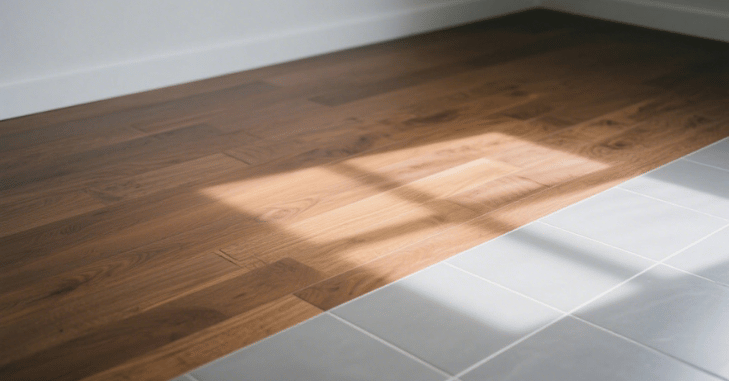
Despite its benefits, transitioning between wood and tile isn’t always straightforward. It comes with specific challenges that need careful attention during planning and execution:
- Height Discrepancies: Wood flooring and tile often differ in thickness, especially when comparing hardwood to thick porcelain tiles. If not managed correctly, this can result in uneven surfaces and tripping hazards. Addressing subfloor levels before installation is essential for a smooth transition.
- Differential Movement: Wood expands and contracts with changes in temperature and humidity, while tile remains stable. This difference can cause stress at the junction, potentially leading to cracks or buckling if not properly accounted for.
- Visual Consistency: Mismatched colors, tones, or patterns between wood and tile can create a disjointed look. A successful transition requires visual cohesion to ensure the space flows naturally.
- Durability Concerns at the Seam: The meeting point between the two materials can be a weak spot if not reinforced properly. Without the right transition technique, wear and tear can quickly become visible.
Effective Transition Techniques You Should Know
To create a seamless and stylish junction between wood and tile, here are some reliable methods that both professionals and DIYers use:
Transition Strips or Reducers
Available in wood, metal, rubber, or laminate, these strips bridge height differences and offer a clean, practical finish. Some designs even allow for subtle stylistic expression. Ideal for floors of equal height, T-molding slots into a small gap between the two flooring types. It delivers a sleek and simple appearance, especially useful in doorways or room transitions.
Custom Tile or Wood Borders

You can use a line of small decorative tiles or narrow wooden planks to delineate the change between surfaces. This adds a designer touch while solving the functional need. A creative and sophisticated option involves interlacing the tile and wood in patterns such as chevron or herringbone. This approach transforms the transition into an eye-catching feature that adds artistry to your floors.
Groutable Vinyl or Wood-Look Tile
These hybrid flooring solutions offer the aesthetics of wood with the durability of tile, or vice versa. They’re especially suitable for moisture-prone environments like bathrooms. Thresholds can also act as bridges between flooring types, especially when moving between rooms. Flush transitions are possible when both flooring materials are installed at the same height, requiring meticulous subfloor preparation.
Design Strategies to Elevate Your Transition
- Harmonize Undertones and Finishes: Even if your wood and tile choices differ in color, selecting finishes with matching undertones ensures they complement rather than clash.
- Follow Natural Lines of Sight: Arrange your flooring so the transition aligns with doorways, furniture edges, or architectural features, guiding the eye effortlessly from one surface to the next.
- Balance Textures and Patterns: If your tile is ornate or highly patterned, opt for a simpler wood grain, and vice versa. This creates visual stability.
- Mind Your Lighting: Lighting affects how colors and textures are perceived. Test both materials under your room’s lighting conditions before finalizing your choice.
- Coordinate with Furnishings: Think about how the transition will interact with furniture layouts, cabinetry, and even rugs. It should complement, not compete with, your design elements.
Installation Best Practices for Long-Term Durability
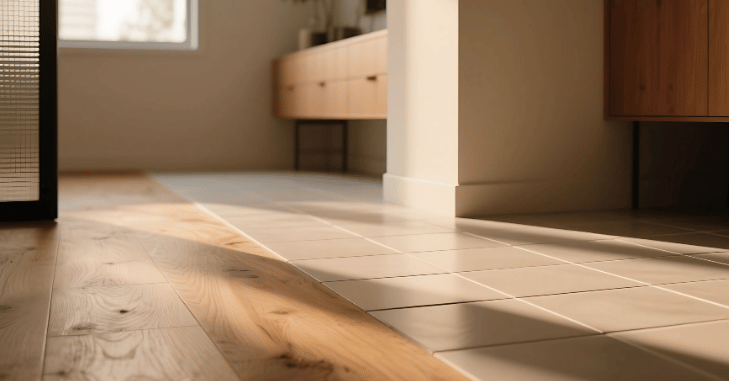
A well-leveled subfloor ensures both materials sit evenly, reducing the risk of future problems. Always leave room for wood expansion and use flexible transition elements that accommodate shifting without damage. Match adhesives to the material tile mortar for tiles and wood adhesives or nails for wood installations.
These elements absorb movement and prevent cracks or lifting where the materials meet. Apply high-quality sealants, especially in wet areas, to protect the junction from moisture infiltration. Regularly inspect the transition for any signs of wear or separation and reseal or repair as needed.
Conclusion
A wood-to-tile transition isn’t merely about connecting two types of flooring; it’s an opportunity to enhance your home’s design, comfort, and functionality. With the right planning, materials, and execution, this transition can act as a design feature that adds beauty, durability, and value to your space.
Whether you prefer a classic look or a bold, modern pattern, the key is to approach the project with care and creativity. When done correctly, your flooring transition will not only stand up to daily wear but also elevate the overall ambiance of your home.
FAQs
This depends on your style. Sleek T-molding offers minimalism, while patterned transitions like herringbone make a bold design statement.
Definitely. A well-executed transition enhances both aesthetics and functionality, which are key factors for potential buyers.
It’s possible with basic transitions and the right tools. Complex designs or level discrepancies may be best handled by professionals.
Keep it clean, check for signs of wear, and reapply sealant periodically, especially in damp or high-traffic areas.
Absolutely. It mimics the look of wood while offering tile’s durability ideal for maintaining design consistency across rooms with different functional needs.