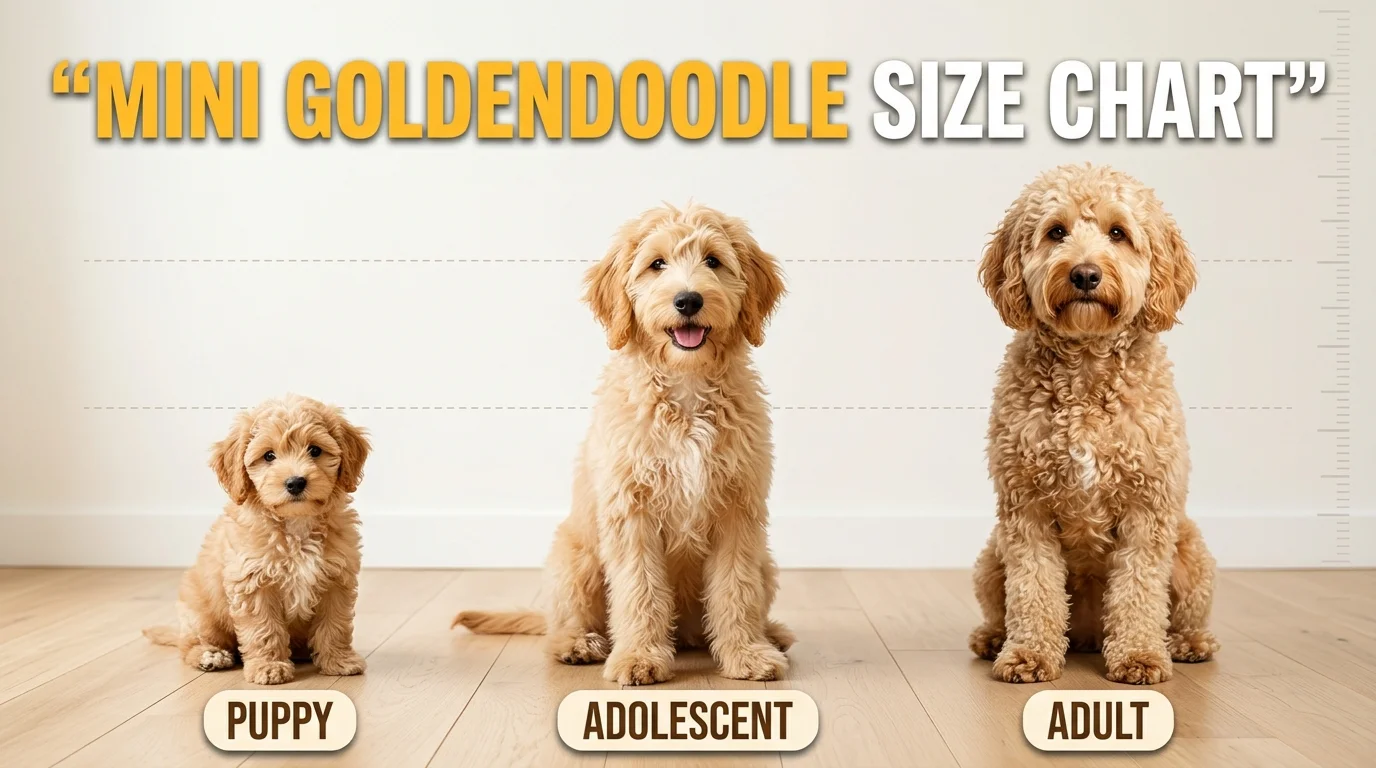
A mini goldendoodle size chart can help you understand how your puppy may grow during its first year. Most adults remain considerably smaller than standard Goldendoodles, but exact sizes vary from dog to dog. Parent size, genetics, generation, nutrition, and development all influence the final result.
The Goldendoodle Association of North America places Mini adults over 14 inches but under 17 inches at the withers. It lists 26 to 35 pounds as the typical weight range. Height determines its size categories because body weight can fluctuate.
Quick answer: A typical Mini adult measures over 14 but under 17 inches at the shoulders. GANA lists a typical adult weight of 26–35 pounds. Broader consumer guides sometimes use 15–35 pounds because breeder definitions differ. Puppy charts should therefore provide estimates rather than guaranteed final weights.
Mini Goldendoodle Quick Size Facts
| Measurement | Typical expectation |
|---|---|
| Adult GANA height | Over 14 to under 17 inches |
| Typical GANA weight | 26–35 pounds |
| Broader commonly published range | About 15–35 pounds |
| Height measurement point | Ground to the withers |
| Fastest growth period | Usually early puppyhood |
| Adult height | Often approached during the first year |
| Final weight | May continue changing after height stabilizes |
| Exact adult size predictable? | No, only estimated |
Different websites and breeders publish wider ranges than GANA. Canine Journal, for example, describes adults around 15–35 pounds and 13–20 inches. That difference explains why two similar dogs may receive different size labels.
TL;DR: What Owners Should Remember
- “Mini” describes a size category, not one guaranteed adult weight.
- GANA uses height as the deciding measurement.
- Its Mini category is over 14 and under 17 inches.
- GANA lists 26–35 pounds as typical for that category.
- Broader breeder definitions may extend below or above those numbers.
- Parent sizes usually offer more useful clues than a generic puppy chart.
- Track your puppy’s trend instead of expecting one exact weekly number.
- Ask your veterinarian about unexpected weight loss or unusual growth.
Mini Goldendoodle Size Chart by Age
The following mini goldendoodle size chart is a practical planning guide, not an official veterinary growth standard. Published growth tables differ because adult sizes and breeding lines vary considerably. Use the ranges to watch direction and consistency rather than judging one weigh-in alone.
| Age | Approximate weight range | What you may notice |
|---|---|---|
| 8 weeks | 4–8 lb | Small body, rapid early development |
| 3 months | 6–12 lb | Legs and frame begin lengthening |
| 4 months | 9–16 lb | Noticeable monthly weight gains |
| 5 months | 12–20 lb | Body becomes less puppy-like |
| 6 months | 15–24 lb | Many puppies reach substantial adult height |
| 7 months | 17–27 lb | Growth may begin slowing |
| 8 months | 19–30 lb | Frame approaches mature proportions |
| 9 months | 21–32 lb | Height gains often become smaller |
| 10 months | 22–34 lb | Weight can keep increasing gradually |
| 11 months | 23–35 lb | Many dogs look close to adult size |
| 12 months | 24–35+ lb | Some dogs continue filling out |
| 18 months | Near adult range | Mature body condition becomes clearer |
These numbers deliberately overlap because growth does not follow one fixed schedule. A healthy puppy can sit outside one row while still developing normally. Parentage provides better context when interpreting a surprising measurement.
How Big Does a Mini Goldendoodle Get When Fully Grown?
GANA defines the Mini category using adult height measured at the withers. Its range sits above 14 inches and below 17 inches. The organization lists 26–35 pounds as typical, not an absolute rule.
Other published sources use wider definitions. Petco lists smaller Goldendoodles around 13–17 inches and 15–35 pounds. Dogster describes an even broader range: 10–35 pounds and 13–20 inches.
That variation matters when comparing breeders in the United States. One breeder may call a 20-pound adult Mini, while another may use Petite. Always ask for projected pounds and inches instead of relying on the label alone.
Why Adult Size Can Be Difficult to Predict
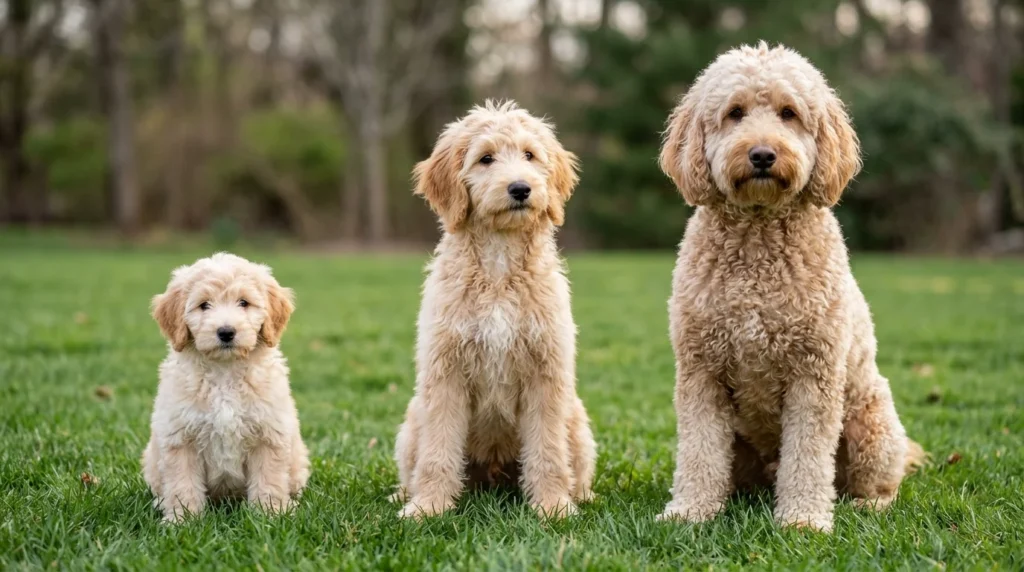
Parent dogs provide the strongest starting point for estimating adult size. A smaller Poodle parent can pull offspring toward a smaller range. Golden Retriever ancestry can also produce puppies larger than buyers initially expect.
Generation can affect predictability because different crosses carry different genetic combinations. F1, F1B, and multigenerational litters do not automatically reach identical adult measurements. A breeder should explain the actual parents rather than promise a number based on the generation label.
Nutrition and body condition can change scale weight without changing skeletal size. GANA specifically emphasizes height because weight naturally varies. Measuring the shoulders can therefore give you a more stable size comparison.
How to Estimate Your Puppy’s Adult Size
Start by asking for the sire’s and dam’s adult weights and shoulder heights. Ask about mature dogs from previous litters involving the same parents. Those details usually provide better context than an internet calculator alone.
Track your puppy’s weight every two to four weeks during early growth. Use the same scale whenever possible to reduce measurement differences. Record the results so you can focus on the trend.
Measure height from the floor to the top of the shoulder area called the withers. Do not measure to the top of the head. GANA uses withers height when determining its adult size classifications.
Avoid multiplying one early puppy weight into a guaranteed adult prediction. Young dogs do not all grow at identical rates. Illness, body condition, genetics, and individual development can change the final outcome.
Mini, Petite, Medium, and Standard Compared
Understanding neighboring categories can make breeder terminology easier to interpret. GANA separates the sizes primarily by adult shoulder height. Its typical weights provide supporting guidance rather than the final classification.
| GANA size | Adult height | Typical weight |
|---|---|---|
| Petite Mini | Below 14 inches | 25 lb or less |
| Mini | Over 14 to under 17 inches | 26–35 lb |
| Medium | Over 17 to under 21 inches | 36–50 lb |
| Standard | Over 21 inches | 51+ lb |
A puppy expected near a category boundary may finish on either side. That does not mean anything went wrong with its development. It shows why responsible sellers describe projected ranges instead of guaranteed final numbers.
Does Male or Female Sex Determine Adult Size?
Sex can influence size in many dog populations, but it doesn’t reliably predict it on its own. Genetics and the parents’ measurements remain more useful for predicting an individual puppy’s size. Published Goldendoodle charts also disagree about separate male and female growth ranges.
Avoid choosing a puppy only because you expect one sex to remain smaller. Instead, ask about the parents, litter history, and mature relatives. Those details give you a stronger basis for estimating adult proportions.
When Does Growth Usually Slow Down?
Growth is usually fastest in the early months and slows as the puppy approaches adult height. Published guides commonly show substantial slowing around the later part of the first year. Some dogs continue adding muscle and body weight after their height changes become small.
That later weight gain should not automatically be treated as continued skeletal growth. Body condition, muscle development, and calorie intake can change the scale number. Your veterinarian can help judge whether the change is appropriate.
Owners should focus more on steady development than on weekly comparisons with another puppy. Littermates can grow at different speeds and finish at different weights. A chart works best as context, not as a pass-or-fail test.
Choosing the Right Size for Your Household
A smaller doodle may suit an apartment, a smaller vehicle, or a household that wants easier handling. Size alone does not determine exercise needs or temperament. Training, enrichment, grooming, and daily activity still require consistent attention.
Families considering particularly small dogs may also find EvoBlogs’ teacup Chihuahua size and care guide useful. It explains why informal size labels should not replace health information. The same caution applies when comparing unusually small doodle puppies.
Household safety matters when a puppy is small and curious. EvoBlogs’ baby gate guide for stairs covers barrier types and installation considerations. Gates can help control access while your dog learns household boundaries.
Readers exploring more pet and lifestyle coverage can also browse EvoBlogs’ Daily Bites section. Related guides can help with everyday household planning. Keep veterinary decisions separate from general lifestyle advice.
When Should You Ask a Veterinarian About Growth?
Contact your veterinarian when a puppy loses weight unexpectedly or stops gaining during an active growth period. Ongoing vomiting, diarrhea, poor appetite, weakness, or unusual tiredness also deserve professional attention. Those signs matter more than missing one number on an online chart.
Rapid weight gain can also deserve discussion. Extra body fat may raise scale weight without indicating a larger skeletal frame. A veterinarian can assess body condition rather than relying on weight alone.
Bring your growth records to routine puppy appointments. A series of measurements gives the veterinarian more useful information than one isolated number. It also makes sudden changes easier to identify.
Questions to Ask a Breeder About Expected Size
A responsible breeder should explain how the adult estimate was produced. They should discuss the parents and acknowledge that projections can change. Be cautious when anyone promises an exact adult weight for a young puppy.
Ask these questions before choosing a litter:
- What are the sire’s adult weight and shoulder height?
- What are the dam’s adult weight and shoulder height?
- How large were mature puppies from previous comparable litters?
- Which size definition does the breeder use?
- Does the estimate rely on parent size or only puppy weight?
- Are Petite, Mini, and Medium separate categories in this program?
- What health testing was completed on both parents?
GANA itself describes puppy-size predictions as educated estimates. Final classification happens when the dog reaches adulthood. That makes transparent ranges more credible than absolute guarantees.
Frequently Asked Questions
Is the mini goldendoodle size chart accurate for every puppy?
No chart can predict every puppy’s final measurements exactly. Genetics create meaningful variation even within the same litter. Use the chart alongside parent size, breeder history, and veterinary growth records.
What is the typical adult weight?
GANA lists 26–35 pounds as typical for dogs in its Mini height category. Other consumer and breeder sources sometimes use broader weight bands. Confirm which definition your breeder follows before comparing numbers.
How tall are they when fully grown?
GANA places Mini adults over 14 inches but under 17 inches at the withers. The withers sit around the top of the shoulders. Other sources may publish wider height ranges because their categories differ.
Can a puppy grow larger than the breeder predicted?
Yes, breeder projections are estimates, not guarantees. Genetic combinations can produce puppies outside the expected range. GANA also states that final size can vary from the original estimate.
Is a 40-pound adult still considered Mini?
Under GANA’s framework, height determines the final category more than weight. A dog over 17 inches falls into a different height category. Ask your breeder which classification system they use before interpreting a 40-pound result.
The Bottom Line
Use growth charts to understand patterns rather than predict one guaranteed adult number. Compare your puppy with its earlier measurements and its parents’ background. That approach gives you more useful information than comparing unrelated dogs.
For U.S. owners, GANA provides a clear reference point for adult size terminology. Breeder definitions can still differ substantially from that framework. Get expected pounds, inches, parent measurements, and health information in writing before choosing a puppy.