Introduction
Ghanaian food is a delightful reflection of the country’s rich cultural heritage, offering a variety of flavors and textures. It features staple ingredients like rice, yams, maize, and plantains, often paired with spicy stews and soups made from fish, meat, and vegetables. Popular dishes such as jollof rice, fufu, and banks are enjoyed by many, showcasing the bold and vibrant spices that characterize Ghanaian cuisine. Known for its hearty portions and flavorful combinations, Ghanaian food provides a unique and satisfying culinary experience that celebrates the diversity and traditions of the Ghanaian people.
Discovering the Heart of Ghanaian Cuisine
Ghanaian cuisine stands out for its deep cultural roots and comforting simplicity — a celebration of earthy staples, soulful stews, and vibrant flavors that bring people together. Central to Ghana’s culinary identity are starchy bases like cassava, millet, plantains and maize, which form the foundation for iconic dishes such as doughy swallows (like fufu or banku), hearty bean-and-rice combinations, and flavorful porridges. What makes these dishes truly memorable are the rich, aromatic soups and stews that accompany them — often simmered with smoked fish, leafy greens, spicy pepper blends, or coconut-infused broths.
The Rich History of Ghanaian Food
Ghanaian food has evolved over centuries, influenced by the various ethnic groups that inhabit the region and historical events such as trade and colonization. The arrival of European traders, particularly the Portuguese in the 15th century, brought new ingredients like maize, cassava, and tomatoes to Ghanaian cuisine. These ingredients have since become staples, integrated seamlessly into traditional recipes.
Ghanaian Food
Ghanaian food is a vibrant reflection of the country’s rich cultural heritage, offering diverse flavors and ingredients. Central to Ghanaian cuisine are staples like jollof rice, a spicy and savory tomato-based dish, and fufu, a starchy side made from pounded cassava or yams. Ghanaian food also features an abundance of soups and stews, often prepared with vegetables, meats, and seafood and flavored with local spices and herbs.
Regional Culinary Diversity
Ghana has multiple ethnic groups, including the Akan, Ewe, Ga, and Mole-Dagbani. Each group has unique culinary traditions, contributing to a rich tapestry of flavors and dishes. For instance, the Akan people are known for their rich stews and soups, while the Ewe people favor spicy, flavorful dishes. This regional diversity ensures that Ghanaian cuisine is varied and complex, with each region offering its culinary specialties.
Essential Ingredients in Ghanaian Food
Staple Ingredients
- Maize: A fundamental ingredient in Ghanaian food, maize makes various staples like kenkey, a fermented maize dough, and banks, a mixture of fermented corn and cassava dough.
- Cassava: This versatile root vegetable is a critical component in dishes such as fufu, a starchy dough-like food, and gari, a type of dried cassava granule.
- Yam: Yams are another staple, often boiled, fried, or pounded into fufu.
- Plantain: Both ripe and unripe plantains are used in various dishes, from kelewele (spicy fried plantains) to tatale (plantain pancakes).
Spices and Seasonings
- Pepper: Hot pepper is a cornerstone of Ghanaian food, adding a fiery kick to many dishes.
- Ginger: Known for its zesty flavor, ginger is commonly used in soups, stews, and marinades.
- Garlic: This aromatic bulb is essential for seasoning meats and vegetables.
- Palm Oil: Extracted from palm fruits, palm oil adds a distinctive red color and rich flavor to many Ghanaian dishes.
Protein Sources
- Fish: Given Ghana’s extensive coastline, seafood is a significant part of the diet. Smoked, dried, and fresh fish are all commonly used.
- Goat: Goat meat is a favored protein, often cooked in soups and stews.
- Chicken: Widely used in various forms, from grilled to stewed.
- Beans: Beans are a vital source of protein and are used in dishes like red-red (bean stew) and waakye (rice and beans).
Iconic Ghanaian Dishes
Groundnut Soup: Made from ground peanuts, this rich and creamy soup is typically served with rice balls or fufu. It’s a staple in many Ghanaian households.
- Light Soup: A tomato-based soup, often cooked with goat, fish, or chicken and served with fufu or rice.
- Palm Nut Soup: Derived from palm fruit, this thick and hearty soup is usually paired with fufu or rice.
- Kontomire Stew: Made from cocoyam leaves, this nutritious stew is often served with boiled yam, plantain, or rice.
Main Courses
- Jollof Rice: A beloved West African dish, Ghanaian jollof rice is made with tomatoes, onions, and various spices. Chicken, fish, or goat meat often accompany it.
- Waakye: A traditional dish of rice and beans cooked together, waakye is typically enjoyed with various sides, such as fried plantain, spaghetti, boiled eggs, and a range of meats.
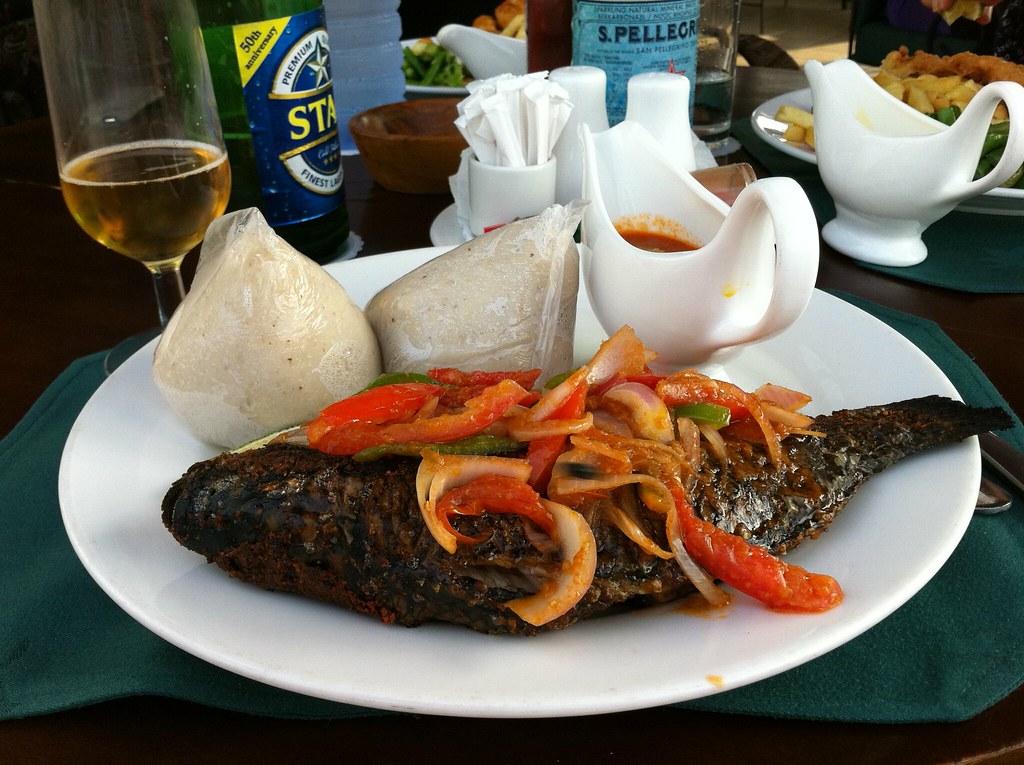
- Kenkey: Fermented maize dough wrapped in corn husks and boiled; Kenkey is usually eaten with fried fish and a spicy pepper sauce.
- Banku: Made from fermented corn and cassava dough, banku is often served with okra soup or grilled tilapia.
Popular Snacks and Street Food
- Kelewele: Spicy fried plantains, kelewele is a popular street food and side dish. It’s seasoned with spices, including ginger, garlic, and hot pepper.
- Chinchinga: Ghanaian kebabs, or chinchinga, are skewers of spiced and grilled meat, typically sold by street vendors.
- Bofrot: Sweet, deep-fried dough balls, like doughnuts, are a favorite snack among Ghanaians.
- Hausa Koko: A spicy millet porridge, often flavored with ginger and cloves, Hausa Koko is typically enjoyed with koose (bean cakes).
The Role of Ghanaian Food in Social and Cultural Life
Celebrations and Festivals
Food plays a central role in Ghanaian celebrations and festivals. Elaborate feasts are prepared during weddings, funerals, and traditional festivals like Homowo and Aboakyer. These occasions provide an opportunity to showcase culinary skills and the richness of Ghanaian cuisine. For instance, during the Homowo festival, kpokpoi (made from corn) is prepared and shared among family and friends.
Daily Meals and Eating Habits
Ghanaians typically enjoy three main meals daily: breakfast, lunch, and dinner. Breakfast often includes light foods such as porridge, tea with bread, or choice. Lunch and dinner are heartier, featuring soups, stews, and staple dishes like fufu, banks, or rice. Meals are often communal, emphasizing the importance of family and community. Sharing food is a significant aspect of Ghanaian culture, fostering a sense of togetherness.
Street Food Culture
Street food is an integral part of Ghanaian food culture. Vendors selling everything from jollof rice to kelewele line the streets of cities and towns. The vibrant street food scene offers an accessible and affordable way to enjoy the diverse flavors of Ghanaian cuisine. Popular street foods include bofrot, waakye, and grilled corn on the cob, providing a quick and tasty meal for people on the go.
Cooking Techniques and Methods
Traditional Cooking Methods
- Pounding: This method is commonly used to prepare fufu. Boiled yam, cassava, or plantains are pounded in a large wooden mortar with a pestle until they reach a smooth, dough-like consistency.
- Smoking and Drying: Fish and meat are often smoked or dried to preserve and enhance flavor. This method adds a distinctive taste to dishes like smoked fish stew.
- Fermentation: Fermentation is crucial in making staples like Kenkey and Banku. Fermented foods have a unique tangy flavor and are easier to digest.
Modern Adaptations
While traditional cooking methods remain prevalent, modern techniques and appliances have also found their place in Ghanaian kitchens. Blenders and food processors are used to streamline processes like grinding spices and making smooth soups. However, many Ghanaians still value the flavors and textures achieved through traditional methods, maintaining a balance between old and new culinary practices.
Ghanaian Food and Health
Nutritional Benefits
Ghanaian food is generally wholesome and balanced, offering a variety of nutrients. Staples like yam, cassava, and plantain provide complex carbohydrates, while beans and meats offer essential proteins. Leafy greens and vegetables in stews and soups contribute vital vitamins and minerals. The use of spices like ginger and garlic not only enhances flavor but also offers health benefits, including anti-inflammatory and immune-boosting properties.
Dietary Practices and Restrictions
Dietary practices in Ghana can vary based on personal, religious, and cultural beliefs. For example, some Ghanaians may avoid certain meats or follow specific fasting periods. However, the diet is inclusive, emphasizing fresh, locally sourced ingredients. Traditional Ghanaian diets are typically low in processed foods, contributing to overall health and well-being.
Experiencing Ghanaian Food as a Traveler
Where to Eat
- Local Restaurants: To truly experience Ghanaian food, visiting local restaurants, known as “chop bars,” is essential. These eateries offer an authentic taste of traditional dishes in a casual setting.
- Street Food Stalls: Street food vendors provide an excellent opportunity to sample a variety of Ghanaian snacks and meals. Popular spots can be found in bustling markets and busy street corners.
- Home Cooking: If you can, enjoying a home-cooked meal with a Ghanaian family offers an unparalleled experience. Home-cooked meals often showcase the depth of traditional culinary skills passed down through generations.
Food Tours and Cooking Classes
Food tours and cooking classes are highly recommended for travelers interested in a deeper dive into Ghanaian cuisine. These experiences provide an interactive way to learn about Ghanaian food’s ingredients, cooking techniques, and cultural significance. Whether touring a local market or participating in a hands-on cooking class, these activities offer a memorable way to connect with Ghanaian culinary traditions.
Etiquette and Customs
When dining in Ghana, there are a few customs and etiquette tips to keep in mind:
- Hand Washing: It is customary to wash your hands before eating, as many traditional dishes are eaten with the hands.
- Sharing Meals: Sharing food from a communal bowl is common, emphasizing the importance of community and togetherness.
- Respect for Elders: Elders are typically served first, and it is polite to wait until they begin eating before starting your meal.
Taste and Price
Ghanaian food offers a delightful balance between pricing and taste, making it accessible and enjoyable for many. The affordability of Ghanaian food, from street vendors to local restaurants, allows everyone to savor its rich flavors without breaking the bank. Dishes like jollof rice, fufu, and banks are budget-friendly and tasteful, thanks to fresh ingredients and aromatic spices. The combination of reasonable pricing and exceptional taste makes Ghanaian food popular for locals and tourists seeking an authentic culinary experience.
Comparison
Ghanaian food stands out compared to other West African cuisines due to its unique blend of flavors and cooking techniques. While dishes like jollof rice are shared across the region, Ghanaian food distinguishes itself with specific variations and ingredients, such as local spices and preparing stews and soups. For instance, Ghanaian food often incorporates more seafood than Nigerian cuisine, reflecting its coastal geography.
Read More: – Best Countries To Visit In January: A Guide To Winter Wanderlust
Conclusion
In conclusion, Ghanaian food is a vibrant and integral part of the country’s cultural identity, offering a unique and flavorful culinary experience. Its diverse dishes, from the spicy jollof rice to the hearty fufu and aromatic stews, reflect Ghana’s rich agricultural landscape and creative culinary traditions. The affordability and accessibility of Ghanaian food make it a favorite among locals and visitors alike. Ultimately, Ghanaian food is a testament to the country’s heritage, bringing together communities through shared meals and celebrated flavors.
Apart from that if you want to know about “The Things to Do in the Philippines” then please visit our “TRAVEL” Category
FAQs
Common ingredients include cassava, plantains, yams, rice, fish, poultry, tomatoes, onions, and spices like ginger, garlic, and chili peppers.
Many dishes can be made vegetarian-friendly, especially those featuring beans, plantains, yam, or rice. Stews and soups can also be adjusted by removing meat or fish.
Popular soups include groundnut soup, palm nut soup, and light soup. These soups are usually served with fufu or other starchy sides.
Key ingredients include cassava, yam, maize, rice, plantains, beans, tomatoes, onions, palm oil, smoked fish, and various local leafy greens.
Jollof rice is beloved for its rich, smoky, tomato-based flavor. It’s easy to customize and is often served at celebrations, making it a staple in Ghanaian culture.