
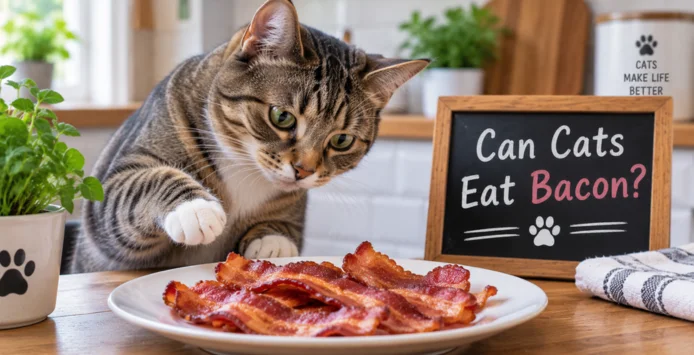
Can cats eat bacon without getting sick? A tiny piece of plain cooked bacon is unlikely to harm most healthy adult cats. Still, bacon is a poor routine treat because it packs fat, sodium, and processed ingredients into a small serving. Seasoned bacon can create extra concerns because recipes sometimes contain onion or garlic. Raw bacon also carries food-safety risks that cooked meat avoids. If your pet steals a large amount or develops symptoms, contact your veterinarian promptly.
| Question | Practical answer |
|---|---|
| Is plain bacon poisonous? | Plain cooked bacon is not considered a classic feline toxin. |
| Is it a good treat? | No, better options provide protein with less salt and fat. |
| Is a tiny accidental bite an emergency? | Usually not for a healthy, symptom-free adult cat |
| What raises the risk? | Large amounts, grease, raw meat, seasonings, or existing health problems |
| Should turkey bacon replace pork bacon? | No, it can still contain substantial sodium and other additives. |
| What should regular treats provide? | Safe ingredients within the animal’s normal calorie allowance |
Direct answer: Plain cooked bacon is not a classic feline toxin, but it shouldn’t be a regular treat. Its fat and sodium can upset digestion and add needless calories. Flavored versions may contain onion or garlic. Large exposures, grease ingestion, or concerning symptoms deserve veterinary advice.
Key Takeaways
- A tiny accidental bite of plain cooked bacon is unlikely to poison a healthy adult cat.
- Bacon should not become a routine snack because it is salty, fatty, and calorie-dense.
- Check flavored products for onion, garlic, sauces, rubs, and other added ingredients.
- Avoid raw bacon, bacon grease, and turkey bacon as intentional treats.
- Call a veterinarian after a large exposure or when vomiting, weakness, tremors, or other concerning signs appear.
Can Cats Eat Bacon Safely?
Plain cooked bacon is not inherently poisonous, according to current veterinarian-reviewed guidance. A tiny stolen crumb differs from a large serving or repeated feeding. Portion size, ingredients, health history, and symptoms all matter when judging an accidental exposure. Cats are obligate carnivores, but that does not make every meat product suitable. Bacon is cured and processed, not formulated as complete feline nutrition.
Regular food should provide a balanced nutrient profile instead of relying on salty table scraps. Treats should also remain a small part of daily calories. The World Small Animal Veterinary Association recommends keeping treats below 10% of daily calorie intake. That limit leaves most of the diet for a complete and balanced primary diet.
Why Bacon Is a Poor Fit for Your Cat
Salt is the first concern with frequent or large servings. Sodium is an essential nutrient, but too much can be dangerous. Serious salt exposure can cause vomiting, diarrhea, lethargy, tremors, seizures, and other neurological signs. Fat is another reason to avoid making bacon a habit. Rich or greasy food can contribute to digestive upset and unnecessary calorie intake. Cats with pancreatic disease may also need individualized dietary guidance from their veterinarian.
It is useful to be precise about pancreatitis risk. Current VCA guidance says high-fat diets are not clearly established as a trigger for feline pancreatitis. Still, veterinarians may limit excessive fat during treatment, depending on the individual animal. Seasonings can create a separate problem from the bacon itself. Onion, garlic, and chives can damage feline red blood cells when enough is consumed. Check the ingredient label rather than assuming every product contains these ingredients.
If you are learning to recognize behavior changes, Evo Blogs’ cat tail language guide can help with general observation. Behavioral signals do not replace veterinary assessment when illness is possible. Sudden weakness, pain, vomiting, or neurological changes need medical attention instead.
What Should You Do If Your Cat Ate Bacon?
Start by identifying what your pet ate and approximately how much disappeared. Check whether the meat was plain, raw, heavily seasoned, glazed, or mixed with another dish. Keep the package or ingredient label available if you need veterinary advice.
| Situation | Reasonable next step |
|---|---|
| Tiny piece of plain cooked bacon, no symptoms | Remove further access and monitor |
| Several pieces or an uncertain amount | Call your veterinarian for individual guidance. |
| Large amount of bacon grease | Contact a veterinarian promptly. |
| The product contains onion or garlic. | Call your veterinarian or an animal poison service. |
| Repeated vomiting, weakness, tremors, collapse, or trouble walking | Seek urgent veterinary care. |
| Raw bacon was eaten. | Ask your veterinarian about the risk of foodborne illness. |
Keep fresh water available while you monitor a minor exposure. Do not use salt or another household remedy to make your pet vomit. The Pet Poison Helpline specifically advises against home antidotes or induced vomiting without professional instructions. U.S. owners can contact Pet Poison Helpline at 855-764-7661 for round-the-clock assistance. The ASPCA Animal Poison Control Center also advises contacting a veterinarian after suspected dangerous exposures. Poison-control consultation fees may apply.
A sitter should also know these instructions when you travel. Evo Blogs’ U.S. cat sitting guide explains how to leave written health and emergency details. Clear instructions reduce guesswork when someone else handles feeding.
Cooked Bacon, Raw Bacon, Turkey Bacon, and Grease Compared
Not every bacon product presents the same concern. Preparation changes bacterial risk, while recipes can change sodium, fat, and seasoning exposure. The simplest rule is to avoid using processed bacon products as regular treats for cats.
| Type | Should you intentionally feed it? | Main concern |
|---|---|---|
| Plain-cooked pork bacon | Preferably no | Sodium, fat, calories |
| Raw bacon | No | Raw-meat pathogens plus nutritional concerns |
| Turkey bacon | No | Processed meat, sodium, preservatives |
| Bacon grease | No | Concentrated fat and possible stomach upset |
| Onion- or garlic-flavored bacon | No | Added potentially toxic ingredients |
| Maple or glazed bacon | No | Extra ingredients without nutritional benefit |
Raw animal products can contain harmful bacteria, including Salmonella and Listeria. The FDA warns that raw pet food diets can be dangerous to pets and to the people handling them, and the CDC does not recommend them either. Cooking reduces this foodborne pathogen concern, although it does not make processed bacon a balanced treat.
Turkey bacon may sound like a lighter substitute, but it remains processed meat. Veterinary guidance still recommends avoiding it because sodium and additives can remain high. Plain, fully cooked turkey is a more suitable occasional option for many healthy pets. Grease deserves separate attention because a small volume can contain substantial fat. It provides no dietary advantage over the animal’s normal food. Keep pans, drippings, trash, and grease containers beyond your pet’s reach.
Better Treats Than Bacon
Plain cooked chicken or turkey offers a simpler meat-based alternative for many healthy adult cats. Remove skin, bones, oil, sauces, salt, garlic, onion, and other seasonings before offering a small piece. Commercial feline treats are another practical choice because their ingredients and calorie information are easier to track.
Treat calories still count even when the food itself is considered safe. WSAVA recommends keeping all treats within 10% of a healthy adult cat’s daily calories. Your veterinarian can provide a more precise limit for weight loss or medical diets. Pets using prescription diets need extra caution. An added piece of meat may interfere with the nutritional plan used for kidney, urinary, gastrointestinal, or other conditions. Ask the treating veterinarian before adding regular table foods.
For more feline care topics, browse the Evo Blogs pet section. You can also explore the site’s broader health section for newly published care guides. Those resources can support daily care alongside professional veterinary advice.
Which Pets Need Extra Caution?
Kittens have different nutritional requirements from healthy adult cats and should receive food formulated for growth. Senior animals can also have medical needs that change appropriate treat choices. A small snack that causes little concern in one animal may be unsuitable for another. Take extra care with pets with kidney, heart, digestive, or pancreatic conditions.
The same applies to animals on sodium-restricted or prescription diets. Contact your veterinarian, who knows your pet’s history, before making bacon a regular part of the diet. Body weight also changes the significance of an accidental serving. No evidence-based universal bacon portion is safe for every animal. Current veterinary guidance recommends judging the amount based on the recipe, the individual patient, and symptoms.
Choose a Safer Treat
One stolen bacon crumb usually calls for observation, not panic, in a healthy animal. Regular feeding is different because repeated salt, fat, and extra calories provide little benefit. Keep bacon off the treat menu and use complete feline food or veterinarian-approved alternatives instead. If your pet ate a large quantity, grease, raw meat, or a seasoned product, contact your veterinarian.
Seek urgent help if neurological or severe digestive signs develop. Having the package, estimated amount, and exposure time ready can make that call more useful.
Frequently Asked Questions
Can Cats Eat Bacon?
A tiny amount of plain cooked bacon is unlikely to poison most healthy adult cats. It still isn’t a recommended regular food because of sodium, fat, calories, and processing. Choose a balanced feline treat or plain cooked lean meat instead.
How Much Bacon Can a Cat Eat?
Veterinarians don’t recommend a universal serving size for every animal. A tiny accidental crumb is different from several strips or a bowl of grease. Ask your veterinarian about any substantial exposure or if your cat has existing health problems.
Can a Cat Eat Turkey Bacon?
Turkey bacon isn’t a better regular treat just because it uses poultry. It can still contain substantial sodium, preservatives, and seasonings. Plain cooked turkey without skin, bones, salt, or seasoning is the simpler option.
Is Bacon Grease Safe for a Cat?
Bacon grease should not be offered intentionally. Its concentrated fat can upset digestion and add calories without balancing the diet. Contact your veterinarian if your pet consumes a large amount or develops symptoms.
What Warning Signs Matter After Bacon Is Eaten?
Watch for repeated vomiting, diarrhea, unusual weakness, marked lethargy, tremors, seizures, or trouble walking. Abdominal discomfort and appetite changes also warrant attention after a significant exposure. Seek veterinary advice rather than waiting when symptoms are persistent or severe.