Introduction
Creating art is as much about inspiration as it is about organization. Whether you’re a professional illustrator, a budding painter, or a hobbyist crafter, having a dedicated workspace that supports your creative flow is essential. That’s where art desks with storage come in.
These thoughtfully designed pieces of furniture go beyond a basic tabletop by incorporating smart storage solutions that keep your supplies tidy, accessible, and safe. A well-equipped art desk can transform a chaotic corner into a productive and visually inviting studio space, tailored to your artistic needs.
From drawers and cubbies to shelves and hidden compartments, the right desk not only improves efficiency but also enhances your overall creative experience. Overall, art desks with storage not only enhance productivity but also promote a sense of order and creativity, turning any room into a personalized art studio.
| Topic | Summary |
| Purpose | Organize supplies, boost creativity, and improve workspace efficiency. |
| Key Features | Drawers, shelves, cubbies, tiltable tops, and durable materials. |
| Desk Types | Traditional, drafting, foldable, kids’, and corner desks. |
| User Benefits | Painters, digital artists, crafters, and students get tailored functionality. |
| Organization Tips | Label items, use vertical storage, use drawer dividers, and declutter often. |
Art Desks with Storage
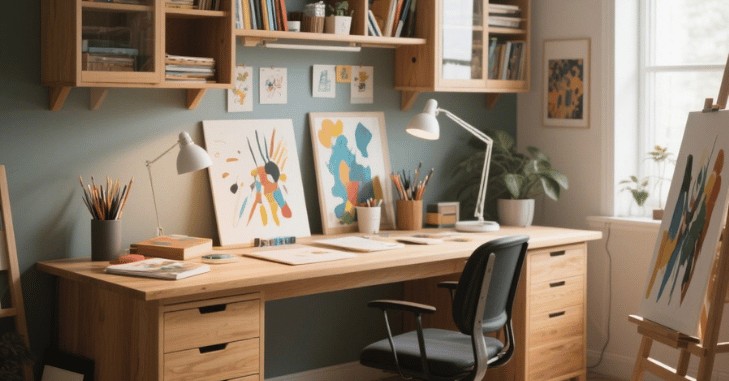
Art desks with storage are a cornerstone of any well-organized creative workspace, combining functionality with design to support a seamless artistic process. These desks are thoughtfully crafted to provide ample space for both working and organizing essential tools and materials.
With built-in drawers, shelves, cubbies, and compartments, artists can neatly categorize brushes, paints, sketchbooks, pencils, and more, reducing clutter and making it easier to stay focused. Whether you’re a painter needing quick access to various mediums, a digital artist juggling cables and gadgets, or a crafter working with an array of supplies, an art desk with storage keeps everything within reach while maintaining a clean and inspiring environment.
The added storage also protects delicate tools from damage and dust, ensuring longevity and usability. Some desks offer open shelving for easy visibility, while others provide closed cabinets for a more minimalist appearance. For those with limited space, foldable or corner designs with hidden storage make the most of every inch without compromising utility.
Why Storage Matters in an Art Desk?
Artists often juggle various materials—paintbrushes, canvases, sketchbooks, pastels, scissors, pens, and more. Without proper organization, the chaos can lead to frustration and inefficiency. An art desk with integrated storage addresses this challenge head-on. Easy access to tools eliminates time wasted searching for supplies. A well-designed storage system promotes a seamless creative process by keeping everything at your fingertips, which in turn fosters concentration and consistency.
Types of Art Desks with Storage
| Type of Art Desk | Key Features | Best For |
| Traditional Artist Desk with Drawers | Deep drawers on one or both sides for tool organization by medium and size. | Painters, illustrators, crafters |
| Drafting Tables with Shelves | Adjustable tabletops with side or undersurface shelves for sketch rolls, rulers, and tools. | Architects, technical artists |
| Foldable Desks with Hidden Storage | Compact, foldable design with concealed shelves or compartments. | Small spaces, minimalist setups |
| Kids’ Art Desks with Storage Bins | Bright desks with colorful bins or cubbies for organizing art supplies. | Children and young learners |
| Corner Art Desks | Wraparound surfaces with built-in cubbies, drawers, or under-desk shelving to optimize corner space. | Multitasking artists, mixed media users |
Key Features to Look For
When choosing or designing an art desk, incorporating adjustable surfaces can significantly improve comfort and reduce physical strain. Tiltable desktops are especially helpful for artists who spend long hours sketching or painting, as they allow for better posture and minimize neck and back discomfort.
It’s also important to consider a variety of storage options. A well-rounded combination of open shelves, closed cabinets, and drawers provides versatility; drawers help keep delicate tools dust-free, while open shelves offer quick and easy access to frequently used items.
Material quality plays a key role in the desk’s durability and ease of maintenance. Desks made from solid wood, MDF, or sturdy metal tend to last longer, while laminated tops are resistant to paint stains and scratches, making them ideal for messy art projects. Ergonomic design should not be overlooked either.

How to Organize Your Art Desk?
Even the best storage features are ineffective without a good system. Here’s how to make the most of your desk:
Label Everything
Clearly labeling drawers, bins, and containers can drastically improve your workflow and organization. Use tags, stickers, or a label maker to identify the contents of each storage space, such as “Watercolors,” “Brushes,” “Sketchpads,” or “Acrylic Paints.” This not only makes retrieving items faster but also helps you return everything to its proper place after a project.
Vertical Storage
Maximizing vertical space is an excellent way to keep your desktop uncluttered while still having essential tools within reach. Installing hanging racks, pegboards, or magnetic strips above or beside your desk allows you to store scissors, rulers, measuring tapes, and even lightweight containers for pens and brushes.
Divide and Conquer
Drawer dividers are a small investment with a big impact. They help organize chaotic drawers by separating items based on size, function, or frequency of use. For example, keep ink pens in one section, charcoal sticks in another, and erasers or sharpeners in smaller compartments.
Regular Decluttering
To maintain an efficient and inspiring workspace, it’s essential to regularly declutter your art supplies. Set a reminder to go through your materials once a month. Toss out dried-up paints, hardened glue, broken tools, or scraps you haven’t used in months. Not only does this free up space for new materials, but it also creates a sense of renewal and clarity in your creative environment.
Best Uses by Artist Type
Here’s how different creators can benefit from specific art desk setups:
Painters
- Deep drawers for tubes and palettes
- Tilting surface for canvas work
- Waterproof, stain-resistant tabletop
Digital Artists
- Spacious desk for monitor, tablet, and stylus
- Cable management holes and outlets
- Under-desk drawers for sketchbooks and hard drives
Crafters/Scrapbookers
- Cubby shelves for glue, tape, scissors, and embellishments
- Large flat surface for cutting and gluing
- Slide-out trays for paper storage
Students
- Compact desk with bins for art supplies and schoolwork
- Built-in whiteboard or chalkboard
- Adjustable height to grow with the child
Art Desk Placement and Setup Tips
| Tip | Description |
| Natural Light is Key | Place the desk near a window if possible. Natural light enhances color accuracy and reduces eye strain. |
| Inspire with Decor | Pin up your favorite artwork, quotes, or mood boards. A visually stimulating workspace can spark creativity. |
| Keep Essentials Close | Organize the most-used items in top drawers or desktop organizers to prevent interruptions during the creative flow. |
Top Art Desk Brands and Models to Consider
Here are a few highly rated options across various budgets:
- Studio Designs 10053 Vision Craft Station—glass top, multiple drawers, ideal for drawing and mixed media.
- Sauder Harbor View Computer Desk—Excellent for digital creators needing extra drawer space and keyboard tray adaptability.
- Melissa & Doug Deluxe Art Desk—A great pick for kids, combining a chalkboard surface with side bins and compartments.
- IKEA MICKE Desk + Add-ons—Customizable with drawers and storage extensions; budget-friendly for all artists.
DIY Art Desk with Storage Ideas
For hands-on creators, building your own art desk can be both cost-effective and deeply satisfying. One popular approach is repurposing old furniture; an unused dining table, for instance, can easily be transformed into a functional art desk by adding under-table drawers or storage crates for organizing supplies.
To further enhance the workspace, custom shelving can be installed on the wall above the desk. These shelves are perfect for holding brush jars, sketchbooks, and decorative items, keeping frequently used tools within arm’s reach while adding a personalized touch.
Additionally, incorporating rolling storage carts, such as the IKEA RÅSKOG or similar models, offers flexible storage that can be moved around the room. These carts are especially useful for artists who switch between mediums and need mobile access to different tools and materials.
Conclusion
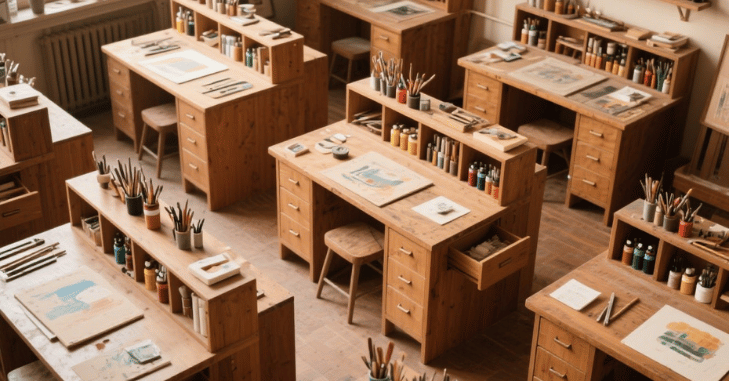
Incorporating an art desks with storage into your creative space is more than a convenience; it’s a strategic move that empowers focus, efficiency, and artistic growth. By keeping tools organized, surfaces uncluttered, and inspiration close at hand, these desks foster an environment where creativity can flourish.
Whether you’re choosing a pre-designed model or crafting a DIY version, the key lies in aligning the desk’s features with your workflow and medium. From natural lighting to ergonomic adjustments and personalized décor, every detail matters in building a workspace that motivates and supports your artistic journey.
Want to know about ‘The Benefits of Linoleum Flooring: Why It’s a Top Choice for Homeowners‘? Check out our ‘Home Improvement‘ category.
FAQs
It keeps your supplies organized and accessible and your workspace clutter-free, boosting creativity and efficiency.
Drawers, shelves, cubbies, hidden compartments, and tiltable tops are popular storage features.
Painters, digital artists, crafters, students, and hobbyists all gain tailored functionality and better organization.
Use labels, vertical storage, drawer dividers, and regularly declutter to maintain an inspiring and efficient workspace.